

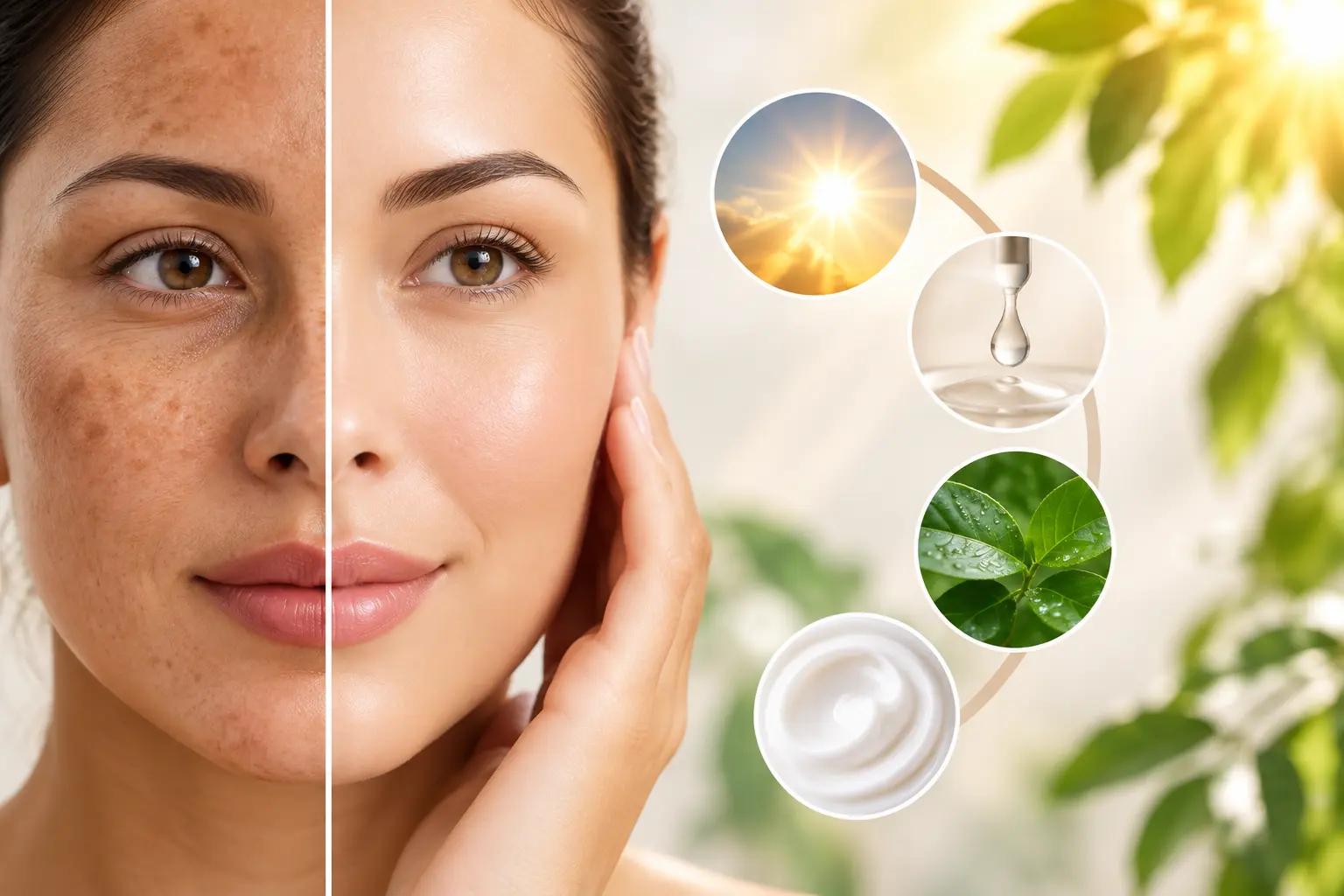
Years of sun exposure add up, even when it doesn’t feel that way at the time. Dark spots, rough texture, fine lines, and a dull or uneven skin tone are common signs that skin has absorbed more UV damage than it can repair on its own. For anyone wondering how to repair sun damaged skin, the answer depends on how much damage has built up and whether it’s being addressed at the surface level or deeper in the skin.
This guide covers what sun damage actually is, what it looks like, which parts of it can realistically be improved, and the range of treatments, from daily skincare habits to in-office procedures, that can help restore a more even, healthy-looking complexion.
At Glo & Glam MedSpa & Skin Care, treatment plans for sun-damaged skin are built around each patient’s skin type, goals, and degree of damage rather than a one-size-fits-all approach.
What Is Sun-Damaged Skin (Photoaging)?
Sun-damaged skin, medically referred to as photoaging, is the premature aging of skin caused by repeated exposure to ultraviolet A (UVA) and ultraviolet B (UVB) radiation. Cleveland Clinic explains that photodamage can come from natural sun exposure or artificial UV sources like tanning beds, and that this exposure ages skin faster than it would naturally age while also increasing skin cancer risk.
Because this damage accumulates gradually, its effects are often not fully visible until years after the exposure occurred, which is part of why sun damage tends to catch people off guard.
What Does Sun-Damaged Skin Look Like?
Sun damage can show up in a number of ways, and most people experience a combination of the following:
Identifying which of these you’re dealing with is the first step toward choosing the right treatment approach.
Can Sun Damage Be Reversed?
This is one of the most common questions people have, and the honest answer is: partially. Sun damage at the cellular level isn’t something that can be completely undone, but many of its visible effects, including sunspots, rough texture, and fine lines, can be meaningfully improved.
According to Cleveland Clinic, treatment options for repairing sun-damaged skin include retinoids, lightening agents, chemical peels, laser skin resurfacing, dermabrasion, and fillers. The right combination depends on the type and depth of damage present, which is best assessed during a professional consultation.
At-Home Care for Sun-Damaged Skin
A consistent at-home routine is the foundation of any sun damage repair plan and can meaningfully slow further damage while supporting the results of in-office treatments:
At-home products can improve the outermost layers of skin over time, but they generally can’t reach the deeper structural damage that more advanced sun exposure causes. For that level of correction, in-office treatment is typically needed. Medical-grade skincare lines like ZO Skin Health and SkinCeuticals are formulated for this purpose and are often built into a treatment plan alongside in-office procedures.
In-Office Treatments to Repair Sun-Damaged Skin
Professional treatments can address sun damage more directly than at-home products alone, often with visible results in a shorter timeframe.
Chemical peels remove damaged outer layers of skin, which encourages fresher, more even-toned skin to surface. Peels can be customized from a light treatment to a deeper one, depending on the degree of sun damage present.
IPL (Intense Pulsed Light) targets pigment in the skin directly, making it particularly effective for sunspots, freckling, and redness caused by broken capillaries.
Laser resurfacing addresses texture, fine lines, and deeper pigmentation at the same time, and is often recommended for patients dealing with more than surface-level discoloration.
A provider can help determine which treatment, or combination of treatments, fits your skin and goals. Learn more about the full range of options on the Lasers & Energy services page.
How Much Does Sun Damage Treatment Cost?
The cost of treating sun-damaged skin varies based on the treatment type, the size and number of areas being addressed, and how many sessions are needed to reach your goals. A single chemical peel, for example, is typically priced differently than a series of laser resurfacing sessions.
Because pricing depends on an individualized treatment plan, it’s best to request pricing after a consultation rather than relying on a general estimate. Patients interested in ongoing treatment may also want to review Glo & Glam memberships or current specials for potential savings.
Sun Damage Repair in Arlington & Colleyville: What Should You Look For?
Anyone searching for sun damage treatment in Arlington, TX should look for a provider that evaluates skin individually rather than applying the same treatment to every patient. A thorough consultation should take into account skin tone, the depth and type of sun damage, treatment goals, and any relevant medical history.
Glo & Glam has locations in Viridian/Arlington and Colleyville, both offering complimentary consultations to help determine the right treatment path.
How to Prepare for Your Consultation
Getting the most out of a consultation means going in with the right questions. Consider asking your provider:
1. Which treatment, or combination of treatments, is recommended for my skin?
2. How many sessions will I likely need to see results?
3. What should I expect during recovery, if any?
4. How should I adjust my at-home routine to support treatment?
5. What results are realistic for my level of sun damage?
6. What is the cost for individual sessions versus a treatment package?
A knowledgeable provider should be able to walk you through the reasoning behind your recommended treatment plan.
Final Thoughts
Sun damage builds up gradually, but repairing it doesn’t have to be complicated. A combination of daily sun protection, the right at-home products, and professional treatments like chemical peels, IPL, or laser resurfacing can meaningfully improve the appearance of sun-damaged skin.
If you’re ready to talk through your options, schedule a complimentary consultation at Glo & Glam’s Arlington or Colleyville location, or read patient reviews to see what others have experienced.
Frequently Asked Questions
Can sun damaged skin be repaired?
Many visible signs of sun damage, including sunspots, rough texture, and fine lines, can be meaningfully improved through a combination of at-home skincare and in-office treatments such as chemical peels, IPL, and laser resurfacing. Damage at the cellular level can’t be fully undone, but treatment can significantly improve the skin’s appearance.
How long does it take to repair sun damaged skin?
Timelines vary depending on the treatment and the extent of damage. At-home routines typically take several weeks to months to show gradual improvement, while in-office treatments like chemical peels or IPL can show visible results within days to a few weeks, often requiring a series of sessions for best results.
What is the best treatment for sun damaged skin?
There isn’t a single best treatment for everyone. Chemical peels, IPL, and laser resurfacing each address different types of damage, and a provider can recommend the right option, or combination, based on your specific skin concerns.
Can you reverse sun damage naturally?
At-home habits like daily SPF, vitamin C serums, and retinoids can improve mild sun damage over time, but they generally can’t address deeper structural changes. More significant damage typically requires professional treatment for meaningful improvement.
Does sunscreen help repair existing sun damage?
Sunscreen doesn’t repair existing damage, but it’s essential for preventing further damage while other treatments and products do the work of improving your skin’s current condition.
Where can I get sun damage treatment in Arlington, TX?
Glo & Glam MedSpa & Skin Care has a Viridian/Arlington location at 4080 North Collins Street, Suite 100, Arlington, TX 76005, as well as a Colleyville location, and offers a range of treatments for sun-damaged skin.